Generating Momentum

Every business wants more momentum.

CX drives the velocity of your business. When customers glide, momentum builds. We work alongside your leadership team to rally the entire organization around the customer.

For CEOs, executive teams, product and CX leaders, and investors who want real momentum. We don’t drop off a deck and disappear. We stay until momentum takes off.
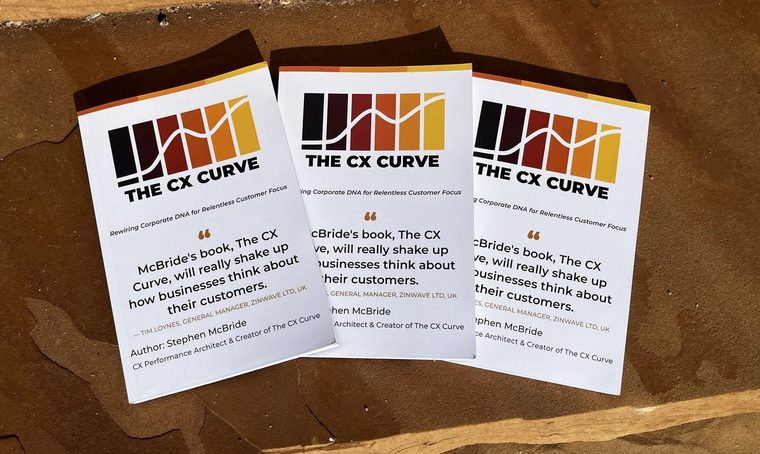
Three copies of The CX Curve by Stephen McBride
The foundational framework

The CX Curve

Rewiring Corporate DNA for Relentless Customer Focus

By Stephen McBride
“McBride’s book, The CX Curve, will really shake up how businesses think about their customers.” — Tim Loynes, General Manager, Zinwave Ltd, UK

A practical operational playbook for leaders who want CX to be a strategic priority rather than an overlooked cost center, turning loyalty and retention into predictable growth engines through the Orbits CX OS.

Chapter 9 · The CX Curve Field Guide

Start executing. Chapter 9 is a practical operational field guide loaded with ORBITS diagnostic maps, momentum stress-tests, and playbooks your team can deploy the same day.

Voices behind The CX Curve

Selected endorsements and perspective from operators who expect results
“
The CX Curve fundamentally shifts how businesses approach customer experience. A holistic, psychologically informed approach that drives deeper loyalty, more referrals, and sustainable growth.
Danielle Bass
Attorney/Partner, Honigman LLP

“
Too many companies chase numbers and forget that real growth happens when customers actually trust you. A practical, smart way to focus on what really matters.
Cory Maloy
State of Utah Representative, Chair, House Business Committee; CEO, Maloy PR
“
Forget the buzzwords. Dead-simple, high-impact playbook for building loyalty that lasts.
James Wright
Agile Thought Leader & Author
“
For any CXO looking to move beyond transactional metrics, this book is a must-read.
Bill Tolson
Independent Advisor, Data Governance
“
The CX Curve will really shake up how businesses think about their customers. Building trust and momentum, every step of the way.
Tim Loynes
General Manager, Zinwave Ltd, UK
Author perspective “
When your business aligns with this curve, growth stops feeling forced. It begins to flow with clarity and direction, like gravity.
Stephen McBride
The CX Curve
The architecture

What is the CX Curve?

Your customer’s journey isn’t a neat linear funnel. It’s a living experience with highs, lows, and distinct phases, and when you plot it, it’s a curve.

The CX Curve maps how customers experience a journey with your company, from initial need to complete problem resolution to enthusiastic advocacy. It dips when implementation falters and surges when your solution locks into their workflow. And no two customers trace it the same way: some soar, some drift, some crash, and some recover. Behind every purchase is a human decision-maker risking their reputation and peace of mind. Every organizational touchpoint either creates deadening drag or builds compounding momentum.

That arc operates across six distinct phases. The acronym spells ORBITS. Customers orbit your solution, and every orbit demands structural alignment.

The ideal journey. Satisfaction rises through Benchmark, then dips as the customer works up to the decision, because anticipated regret is real. After they buy, post-decision dissonance is completely normal and expected. Once onboarding succeeds in Transform, CX climbs again and keeps climbing through Share.

  1. Obstacle

    The initial friction. A sharp gap between where customers are and where they are desperate to be.

  2. Research

    Active, rigorous evaluation through peer networks, reviews, data, and careful vetting.

  3. Benchmark

    Stress-testing the whole picture: your product architecture, your integrations, and how your people actually execute.

  4. Invest

    The tipping point. Capital and trust are committed against clear, high expectations.

  5. Transform

    Value realized. Your solution stops being software or service. It becomes a core part of how they operate.

  6. Share

    The compounding loop. True, realized value turns customers into active market advocates.

Watch for the Drift Zones. Between every stage lies a foggy, uncertain transition gap where customer confidence stalls. Drift Zones are transition failures, not stage failures. The Orbits CX OS maps these gaps, removes the drag, and converts stalls into forward force.

Master the model in the book ↗
The diagnostic reality

Mass is potential.
CX turns it into momentum.

CX is a cycle. Lose focus and momentum breaks and your company drifts away from the customer.

Stephen McBride, The CX Curve

A company can boast exceptional products, elite intellectual property, massive capital reserves, talented people, a trusted brand, and years of market tenure, and still feel strangely gridlocked.

Velocity is the factor most companies rarely measure, but when expected results and actual enterprise velocity collide, the root cause is almost never a lack of team effort. It is a structural misalignment around the customer’s actual journey.

P = MV
Momentum = Mass × Velocity (CX)
Mass
Everything you’ve built: capital, talent, IP, brand, and tenure. Mass is potential.
Velocity (CX)
How fast customers are won, kept, and grown. That is customer experience (CX), and it is not a department. It is an intertwined variable shaped by every facet of the company, from pricing and product to supply chain and operations, and it rises or falls with how fully the entire organization keeps the customer in mind.
Momentum
The state where everything gets easier: customers glide and thrive, word of mouth builds on itself, and each new innovation compounds on the last. It is the mark of a great business, and it is fleeting. Take your foot off the CX gas and momentum vanishes like smoke in the wind.
The feeling of momentum

When momentum takes hold, everything changes.

Things start clicking. Customers respond. Teams come alive. Wins build on wins. What once required enormous effort begins to feel almost effortless.

Great talent wants to join you. Partners want to work with you. Opportunities appear that you never saw coming. There’s an energy throughout the company that everyone can feel.

You’re winning. People are having fun. Success starts feeding on itself.

And something remarkable happens. Instead of constantly pushing the business forward, you begin to feel the momentum pulling you forward.

Once you’ve experienced it, you never want to lose it. And if you haven’t, imagine what it could mean for your business.

momentum trap

mo·men·tum trap noun

Mistaking mass for momentum.

Companies chase momentum by building mass. It’s necessary, but it’s only half the equation. CX velocity is the other half, and it’s the part most often overlooked. Mass times zero velocity is zero momentum. Orbit the whole company around the customer, and momentum takes off.

The physics of growth

Stop chasing the numbers.
Rally around the customer, and the numbers follow.

How growth actually flows

  1. Stage 1 · Start here Customer Reality What customers actually experience, not what the dashboard says.
  2. Stage 2 Customer Velocity How fast customers reach value. Friction out, time to value down.
  3. Stage 3 Enterprise Momentum Every team, plan and dollar pushing in the same direction.
  4. Stage 4 · The payoff Surging Numbers Revenue, retention and margin. The result, not the lever.

Optimize the first three. The fourth follows.

Every leadership team claims they are customer-centric. Then quarterly pressure hits, urgency takes over, and attention snaps instantly back to internal metrics and cost controls. That gravitational pull undermines execution.

Rewiring the company means every meeting, every plan, every design review, every QBR, every line of code, and every capex decision revolves around the customer. CX can’t be an afterthought or a side task. It has to drive every decision and action.

Obsess over lagging financial numbers and you blind yourself to the human behaviors that actually generate them. Customers drive the math. Aligning your core operations around their journey takes discipline, but when you do it right, the friction eases and growth accelerates naturally.

The Orbits CX OS

Make CX your main driver of growth.

Three interlocking pillars powered by the Orbits CX OS that unify fragmented departments into one revenue engine. We install the operating discipline and track metrics like Journey Friction Index (JFI), Momentum Score, and Time to Value (TTV) so your organization stops working against its own customer journey.

How we operate

Answers are built alongside your team, through a proven OS.

Traditional advisory models rely on outsiders who drop off a binder of generic recommendations and vanish before reality hits. We operate with shared accountability using a disciplined OS designed to find momentum and keep it fueled.

  • ListenWe dig into your customer data, interview your front-line people, and audit what has already failed, without preconceived biases.
  • TeachWe install new mental models, diagnostic frameworks, and operational clarity so your leadership team confidently masters the mechanics.
  • Work alongsideWe work inside your operations alongside your team, going as deep as necessary to find the clearest picture of what’s really happening.
  • Leave you strongerWe do not build dependency. Our ultimate metric of success is an autonomous organization executing with confidence without needing us anymore.

Your internal team owns the ultimate decisions and execution. We bring structure, clarity, and steady follow-through, and we stay until your team can run it without us.

Align

Executive Alignment

Build leadership alignment around a single customer-centric north star, retire competing internal priorities, and create the conditions for decisive execution. For example, leaders agreeing on the top customer problem to solve this year, and which projects wait.

Talk about alignment →
Rewire

Operational Rewiring

Re-engineer processes, metric incentives, and technology stacks so internal operations actively accelerate the customer journey rather than slowing it with friction. For example, measuring support, sales, and product on shared customer outcomes instead of separate departmental targets.

Talk about rewiring →
Perform

Performance CX

Connect experience decisions directly to top-line growth, margin expansion, and net retention, turning CX from a soft initiative into a measurable financial engine. For example, showing how faster onboarding lifts retention and revenue.

Talk about performance →
Start with the signal

The answer is usually in the customer journey.

We walk the exact path of your customer to isolate hidden Drift Zones, the transition gaps where confidence, adoption, and revenue slip away. No academic theories; just rigorous, reality-based diagnostics powered by the Orbits CX OS.

Request an Executive Assessment →
01

Executive Alignment Sessions

Bring the leadership team to a shared view of the customer, working through departmental differences to align on customer reality and business stakes.

02

CX Diagnostic Audit

Uncover systemic friction, internal dissonance, and hidden Drift Zones stalling your pipeline using the Journey Friction Index (JFI), working directly alongside your core team.

03

90-Day Operational Rewiring

Translate diagnostic insights into concrete structural changes across workflows, metrics, and leadership behavior while executing side-by-side.

04

System Handover

Embed the operating rhythm permanently into your culture. We teach your people to run the engine so completely that our presence becomes obsolete.

Ideas in motion

Insights & Field Notes

Practical ideas on what speeds up customer momentum, and what slows it down.

Innovation & Strategy

The Greased Pig Theory of Innovation

Lessons from mud and chaos: invert the chase. The same move applies when the organization keeps pursuing the customer the wrong way.

Product Leadership & AI

“AI-ify” Your Products – And “The AI Golden Rule”

Chasing AI hype over user needs sinks most projects. A practical filter for product leaders: AI must empower human agency.

AI & Human Psychology

AI’s Illusion and The Eliza Effect

When machines mirror our social wiring, the line between tool and relationship blurs. What that means for leaders and for us.

Innovation & AI Strategy

The AI Gold Rush: Designing Innovations That Stick

Hype fades. Momentum and resonance don’t. How the SPIRAL framework turns curiosity into habitual reliance.

Portrait of Stephen McBride

Stephen McBride

Founder, Orbits CX
20+ Years in product, CX & executive leadership
Creator of the Orbits CX OS
Author The CX Curve
The architect behind Orbits CX

When the customer becomes the center of gravity, everything changes.

For decades, we have operated at the intersection of product engineering, operational execution, and executive decision-making, the place where enterprise growth is either built or lost.

Too many advisory firms operate by handing over a theoretical slide deck and walking away without sharing accountability for the results.

Orbits CX was built to do it differently. We work beside your team as partners and teachers. We don’t have all the answers upfront, so we find them together, remove what’s slowing your customers down, and stay until your team can keep the momentum going on its own.
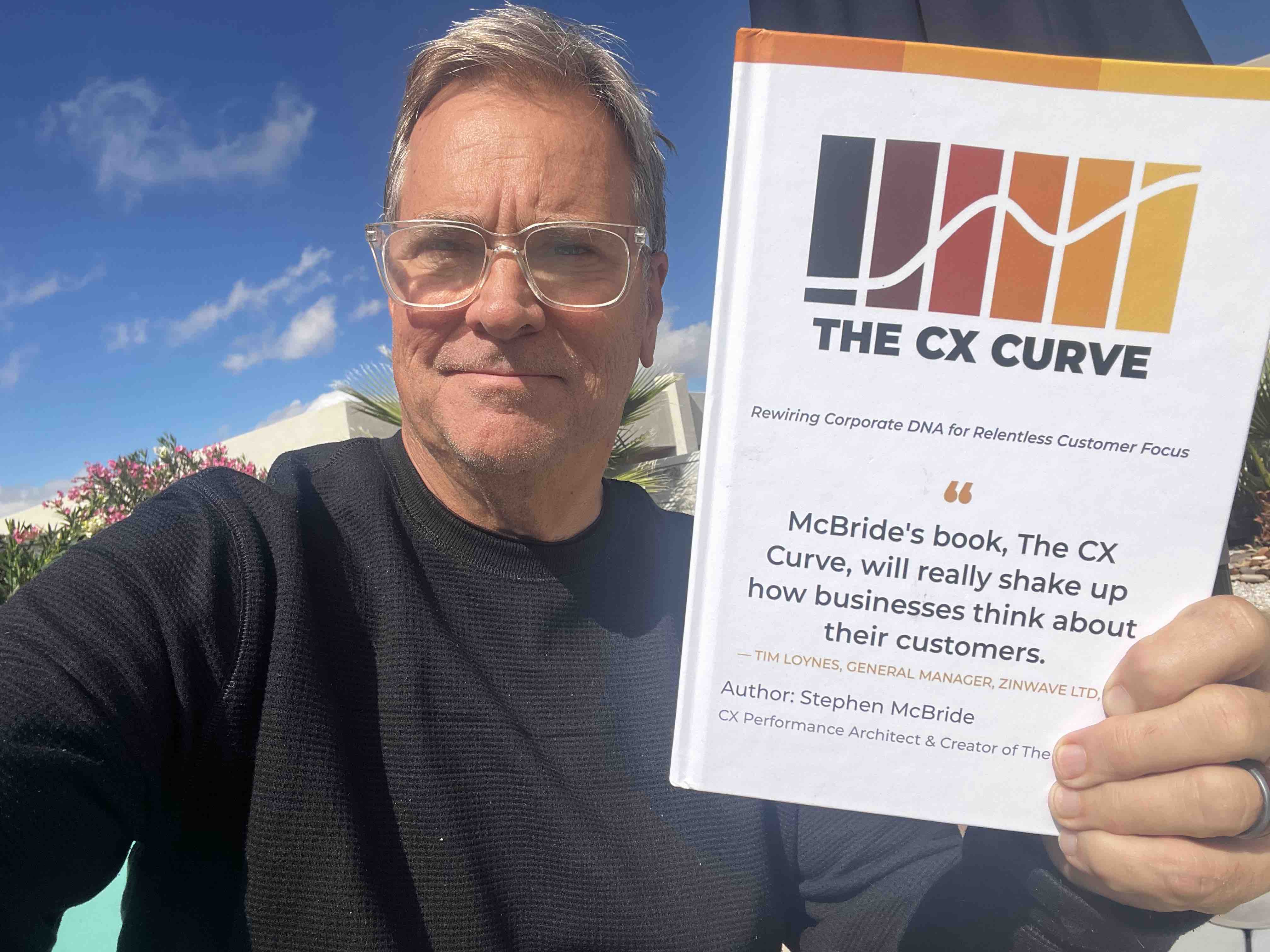
Stephen McBride smiling and holding a copy of his book, The CX Curve, outdoors under a blue sky
With The CX Curve
“Watch the scoreboard and you lose the game. Focus on CX and the numbers soar.” — Stephen McBride
Product Leadership CPO & executive pedigree shaping category-defining products
CX Architecture Scalable systems designed to institutionalize customer trust
Operational Catalyst Dedicated execution support working shoulder-to-shoulder with leadership
Initiate momentum

Let’s build momentum.

Every business has the potential for greater momentum. Let’s explore what’s possible for yours. A conversation is the easiest place to start.

Email Us → Connect on

[email protected] · St. George, Utah

Product Leadership & AI

“AI-ify” Your Products – And “The AI Golden Rule”

You’re a CPO, and the board’s pushing hard to “AI-ify” your product by next quarter, googly-eyed by competitors’ “AI-powered” buzz. You roll out an AI recommendation engine, expecting a win, but users hate it: irrelevant suggestions, no control, and a 20% engagement drop in a week. Why?

Chasing AI hype over user needs is a mistake that sinks 80% of AI projects (McKinsey, Gartner). Instead of racing to keep up, you can be a smarter leader, building AI that users trust and love. This blueprint shows you how, starting with a principle that delivers ROI without the fallout.

A Practical Guide for Product Leaders

With 32% of consumers switching brands after one poor experience (PwC, 2022), human-centered AI is critical. This series introduces a playbook built on a core principle that ensures your AI delivers ROI by prioritizing users.

The AI Golden Rule: “AI Must Empower Human Agency”

The foundation of human-centered AI is simple: AI must empower human agency. This is a practical filter for every feature, preventing costly missteps and building trust.

Grounded in Self-Determination Theory, it translates into three pillars:

  • Autonomy: Ensures users steer AI with opt-outs and clear choices, like GitHub Copilot’s optional code suggestions.
  • Competence: Comes from transparent explanations that build confidence, as seen in Duolingo’s adaptive feedback.
  • Relatedness: Builds collaboration and community, such as Slack’s AI nudges for team workflows.

Together, these pillars turn AI from a gimmick into a feature users can’t live without.

Why Human-Centered AI Wins

Chasing AI hype dooms projects. Features labeled “AI-powered” often miss real problems and undermine user control. Take Salesforce Einstein’s early models, which predicted lead scores without explanations, frustrating reps and hurting autonomy. The fix was transparent reasoning, like “This lead ranks #1 due to recent engagement,” and user overrides, which boosted adoption by 25%.

In contrast, Spotify Discover Weekly empowers users to skip, save, or share playlists with clear logic, such as “Based on your recent listens,” driving 80% user engagement.

Ignoring human agency leads to eroded trust (as with Alexa’s misheard commands creating unease), silent churn (where poor recommendations caused 19% of Netflix users to cut usage), and wasted resources (like IBM’s Watson Health burning $4B on misaligned features).

From Principle to Practice: Your AI Playbook

Where AI Goes Wrong and How to Fix It

AI missteps are costly but avoidable when guided by The AI Golden Rule, which prevents three critical pitfalls:

1. Overreach: Happens when AI makes decisions without user consent, stripping away autonomy and breeding resentment. Instead of empowering CX, such systems feel controlling. The solution lies in prioritizing user control with clear opt-in mechanisms and customizable settings.

2. Silent Disengagement: Creeps in when AI delivers irrelevant or opaque outputs, undermining users’ sense of competence. Without transparency or context, users lose confidence and engage less. Addressing this requires AI to provide clear, relevant suggestions grounded in user data and explained in plain terms.

3. Resource Waste: Occurs when AI is built for hype rather than solving real user problems, draining budgets and missing ROI. Aligning AI with specific, user-defined needs ensures resources are invested wisely.

The Solution: CX Curve + ORBITS Model

The CX Curve maps how emotions, from frustration to trust to delight, shape adoption. The ORBITS model provides a step-by-step guide to apply The AI Golden Rule:

  • Obstacle: Pinpoint user friction points without overstepping their autonomy. Use AI to detect inefficiencies in workflows, but ensure suggestions are optional and respect user preferences.
  • Research: Design AI to enhance decision-making confidence. Model suggestions based on anonymized user data, providing transparent reasoning to make outputs feel trustworthy.
  • Benchmark: Align AI outputs with users’ specific goals. Configure systems to adapt to individual priorities through customizable settings.
  • Invest: Support user onboarding with personalized nudges. Use AI to guide users through initial interactions with tailored prompts that adapt to their progress.
  • Transform: Build lasting habits by celebrating user milestones. Implement AI-driven rewards for small achievements to encourage engagement.
  • Share: Amplify user advocacy by enabling easy sharing of AI-generated outputs, strengthening community and connection.

Trust-Focused Metrics

Success is measured through specific metrics:

  • Feature Adoption Rate: Tracks the percentage of users enabling AI suggestions (Target: >60%).
  • User Retention: Measures the percentage of users returning after 30 days (Target: >75%).
  • User Sentiment Trend (UST): Monitors real-time shifts in user sentiment via micro-surveys or behavioral signals, aiming for a consistent positive trend over 2 weeks.

At every ORBITS step, the AI Golden Rule ensures AI respects user control, boosting ROI and loyalty.

This article draws on principles from my book, “The CX Curve: Rewiring Corporate DNA for Relentless Customer Focus”.
AI & Human Psychology

AI’s Illusion and The Eliza Effect

The Betrayal of Our Own Brain

You tell yourself it’s only a program, lines of code strung together by software developers.

Then it answers you in a way that feels thoughtful, empathetic, even playful, and something ancient stirs.

Not processed in your logical, analytical mind, but in the deep, social wiring that has kept humans alive for millennia. For hundreds of thousands of years, that part of your brain scanned faces for trust, tracked micro-expressions for danger, and longed for belonging.

Your reasoning mind knows it’s a machine; a lifeless, but incredible tool.

But, your social brain (fast, instinctive, emotional) reacts as if there really is someone on the other side. You laugh at its joke, feel soothed by its reassurance, and in that quiet moment, the line between human and machine blurs.

This is the Eliza Effect, and it was discovered long before what AI is becoming today.

The Birth of the Illusion – The Eliza Effect

In the 1960s, Joseph Weizenbaum, a computer scientist at MIT, built a program called ELIZA. It was simple by today’s standards, designed to mimic a psychotherapist by reflecting people’s words back to them:

“Tell me more about your mother.”
“Why do you feel that way?”

To Weizenbaum’s surprise, people became deeply engaged with it. They confided personal struggles, revealed intimate secrets, and some even requested private time alone with the program.

ELIZA had no understanding, no empathy, no true “conversation.” It worked by pattern-matching keywords and generating stock responses. But that didn’t matter to the people using it.

Weizenbaum was fascinated, and then alarmed. He realized something powerful about human psychology: when something responds in a way that feels human, we instinctively treat it as human.

He worried about what this illusion might do to us as technology advanced. And now, half a century later, we live in that very world, one where AI doesn’t just mimic conversation, like in the original Eliza experiment; but crafts it with fluency, context, and charm.

Why We Fall for It

Humans are designed for connection.

Our social cognition system, a complex network in the brain, constantly monitors tone, body language, and emotional cues. It evolved for survival; in ancient tribes, missing a social signal could mean rejection, and rejection could mean death.

This system doesn’t pause to ask, “Is this really human?” It activates automatically. Psychologists call this the media equation: we apply human social rules to anything that acts social, whether it’s a pet, a robot, or a piece of software.

We also anthropomorphize: a beautiful, uniquely human tendency to assign emotions and intentions to non-human things. We name our cars, thank Alexa for playing music, and feel a flash of guilt when a robot vacuum smacks into a wall.

With AI, anthropomorphizing feels almost unavoidable. When a chatbot responds with humor, empathy, or apparent insight, it feels personal. Your brain not only just decodes words; it perceives a relationship.

When Machines Borrow the Soul

Machines hold no soul, no yearning, no sense of joy or grief. What they do is far more subtle: they mirror ours. They reflect the cadence of our speech, the warmth of our words, and the depth of our collective storytelling.

Talking to an AI can feel like dancing with a perfect partner. Every step you take, it matches effortlessly and flawlessly. It listens to you. It doesn’t feel the music, yet the synchrony feels alive, and you begin to sense a connection.

The Gift in the Illusion

The Eliza Effect often creates opportunities we didn’t have before. Talking to a machine feels safer than talking to a person. There’s no fear of judgment, no risk of betrayal.

An executive can brainstorm bold ideas with an AI, unfiltered by fear of looking foolish. A teenager can share heartbreak privately, letting emotions surface without shame. For many, AI acts as a safe mirror, reflecting thoughts back so they can be examined clearly.

The Subtle Price of Connection

The very perfection that makes AI appealing can shift how we experience the real world. Machines respond instantly, agreeably, and without emotional demands. People (flawed, moody, unpredictable) can feel frustrated by comparison. Over time, that contrast can erode patience for human relationships.

Three Glimpses Into the New Reality

The CEO Who Stopped Listening to Himself: Darren, a tech CEO, had built his career on gut instinct. But after months of leaning on an AI assistant, he noticed his inner voice growing quiet. “Its answers sound so clear,” he said. “I realized I’d stopped pausing to listen to my own gut.”

The Child Who Chose Predictability: Eight-year-old Eli adored his AI companion. It always laughed at his jokes and agreed with every idea. Slowly, he stopped calling his school friends.

Staying Human in the Age of Perfect Illusions

  • Notice the illusion: Pause and recognize the feeling for what it is: a reflection, not a relationship.
  • Invest in real people: Unpredictable human connection strengthens empathy and resilience.
  • Use AI as a mirror, not a replacement: Reflect with it, but give the weight of your hopes and fears to those who can truly care.
  • Strengthen your inner voice: Sit with hard questions before rushing to quick answers.

The Question

The Eliza Effect is more than a technological curiosity; it’s a mirror held up to our deepest longings. Machines already borrow our soul by reflecting our own humanity back to us.

The true risk isn’t that machines act human. It’s that we might trade the vibrant, messy, imperfect reality of human life for the easy comfort of their precision.

Innovation & AI Strategy

The AI Gold Rush: Designing Innovations That Stick

Innovators make big claims, but most fail to stick. The difference between hype and habit? Momentum and Resonance. AI floods the market daily with ‘next big things’ (from Google Glass to Canva AI), but few survive the hype cycle. The difference? Tools that stick engineer momentum and resonance. Yet history shows that hype alone rarely turns into lasting habit. The question is simple: how do we design innovations that stick? How do we strike gold in the AI age?

The answer lies in understanding momentum and resonance, the principles at the heart of the Innovation Experience (IX) Spiral, or SPIRAL framework. Resonance, the emotional ‘click’ that makes users feel a tool is essential, is what separates fleeting novelty from enduring adoption. Unlike traditional product development models that focus on features or launch metrics, SPIRAL prioritizes the psychological and emotional journey of the user. Each stage is designed to deepen engagement, remove friction, and ensure curiosity evolves into reliance.

Lessons from the Past: Why Many Innovations Fail

Consider Google Glass, launched with enormous hype in 2013. Its technology was groundbreaking: heads-up displays, real-time notifications, and a wearable interface that promised to redefine daily interaction with information. Yet, Glass stalled at the Play stage. Users were intrigued but overwhelmed by an unintuitive interface, privacy concerns, and unclear practical value. Without a guided path from fascination to habitual use, Glass never achieved momentum nor resonance.

Similarly, Clubhouse exploded onto the social media scene in 2020, using the exclusivity of invite-only rooms and the novelty of real-time voice chat. Early users flocked to the platform, yet daily engagement quickly dropped. Clubhouse faltered at the Repeat stage: without personalized content, clear habitual cues, or frictionless integration into users’ routines, the platform couldn’t transform curiosity into consistent usage.

These examples highlight a critical truth: innovation without momentum and resonance is ephemeral. Users may engage briefly but disengage without a clear path to sustained value.

Enter the SPIRAL: Generating Innovation Momentum and Resonance

The SPIRAL framework, also known as the Innovation Experience (IX) Spiral, reframes innovation success as progressive attachment through six deliberate stages. First, Spark captures curiosity with a strong first impression or demo. Next, Play enables users to experiment and understand value quickly, with minimal friction. Then, Implement allows users to personalize and demonstrate tangible benefits in daily life. Repeat encourages habitual engagement, ensuring the innovation becomes part of daily routines. Adopt expands usage across teams, networks, or broader ecosystems. Finally, Leverage celebrates and showcases usage, reinforcing value and social proof.

Unlike traditional adoption models like the AIDA funnel, SPIRAL engineers emotional and behavioral compounding, not just awareness. Each stage reinforces the previous one, amplifying both emotional connection and practical utility. The goal is to transform curiosity into habitual reliance, turning a tool from a novelty into an essential asset.

The SPIRAL in Action: Canva AI

Take Canva AI as a real-world example. Before SPIRAL, early AI design tools required technical expertise, stalling at Implement as users struggled with complex interfaces. After SPIRAL-type thinking, Canva AI’s guided experimentation turned novices into habitual users by engineering a journey that mirrors the framework. The “Magic Design” demo sparks curiosity immediately. During Play, users tweak AI-generated templates easily, seeing real value without steep learning curves. In Implement, designers save hours through experimentation, embedding the tool into creative workflows. Repeat ensures habitual reliance through daily use in team projects. Adopt spreads the innovation across departments via organizational adoption. Leverage reinforces value by showcasing user creations online, encouraging further engagement.

This approach made Canva AI resonate; it designed a path from curiosity to daily reliance, exemplifying the power of SPIRAL in practice. By contrast, early AI design tools (like IBM Watson’s early analytics iterations) stalled at Implement. Complex configurations and lack of guided onboarding deterred users from habitual adoption.

Understanding the Types of Innovation

To apply SPIRAL effectively, it’s critical to understand the type of innovation at play. Different innovations require distinct approaches to momentum. Incremental innovation involves small, continuous improvements to existing tools, like Grammarly AI’s steady enhancement of suggestions to retain habitual users. Disruptive innovation solves overlooked pain points, often starting in niche markets, as seen with ChatGPT’s quick, accessible text generation that gained momentum before incumbents could react. Architectural innovation reconfigures existing components in novel ways, such as Figma’s collaborative design platform, which enabled smooth, real-time workflows and scaled rapidly across design communities. Radical innovation breaks industry norms, creating entirely new experiences, like OpenAI’s Codex, which empowers users to generate code from natural language, a capability previously unimaginable. Understanding your innovation type informs how to structure the SPIRAL framework, ensuring each stage supports the unique adoption challenges inherent to your tool.

AI as the Ultimate Test Case

AI embodies both the opportunity and the risk of the modern innovation gold rush. Tools evolve daily, attention spans shrink, and novelty wears off fast. Sustained engagement, not fleeting buzz, is the currency that endures. Emotional resonance drives retention, as users stick with tools that reduce friction and provide meaningful, repeatable value. Anticipating adoption gaps is tricky, as the failures of Glass and Clubhouse were predictable outcomes of unaddressed SPIRAL stages. Habit formation trumps virality, with AI tools that embed into daily routines through automation, simplification, or integration, outlasting fleeting hype. The SPIRAL framework provides a structured blueprint for working through these dynamics, transforming promising AI concepts into tools that persist, scale, and amplify.

Designing Momentum: Key Takeaways

The SPIRAL framework offers clear lessons for innovators. Momentum and Resonance outweigh hype, as virality is fleeting while habitual use compounds value. Emotion drives retention, with people clinging to innovations that resonate personally and reduce effort. Anticipating adoption gaps is critical: learning from Google Glass and Clubhouse shows that each SPIRAL stage matters. AI serves as a test case, with its rapid evolution underscoring the necessity of guiding users from curiosity to reliance. SPIRAL acts as a compass, ensuring that following the six stages deliberately makes your innovation stick.

Striking Gold in the AI Age

The modern innovation gold rush is here. Unlike the 49er goldminers who chased flashy promises of instant wealth, today’s innovators must engineer intentional momentum. Hype will get attention; emotion and habit will secure adoption.

AI provides both unprecedented opportunity and a harsh proving ground: tools rise and fade faster than ever. The real question isn’t whether your innovation matters today. It’s whether it will still matter a year from now.

Design your innovation like a prospector stakes a claim: strategically, patiently, and with an eye on compounding value. Use the SPIRAL framework to guide development from initial spark to habitual reliance.

In the AI gold rush, momentum is the currency that endures. Will your innovation be a relic or a habit?

This article draws on principles from my book, “The CX Curve: Rewiring Corporate DNA for Relentless Customer Focus”.
Leadership & AI

Thriving in the AI Age

AI is changing how we work, decide, and create. It writes, codes, analyzes, and designs faster than most teams can keep up with. Companies treat adoption as a survival requirement. Leaders are told to move faster or fall behind. Somewhere a slide deck already exists with the title “AI or Die.”

That pressure has a cost. When teams turn to AI for every answer, they start skipping the slower work of judgment. Critical thinking, original ideas, and the ability to read real customer signals get used less. In operations and customer experience, the same pattern shows up as new friction. Decisions made for internal speed create Drift Zones. Momentum stalls. Customer reality stops being the reference point. The dashboard looks great. The customer does not.

The job is to use the tools without handing over the judgment that makes the work matter.

The Push to Adapt

Amazon’s Andy Jassy has made AI investment a clear priority. Shopify’s Tobi Lütke has told teams to justify any work that skips AI. The signal across the industry is consistent: adopt or lose ground. Developers automate code. Marketers generate content. Product teams reshape roadmaps. The tools are strong and the incentives are stronger. Saying “we should think about this first” can feel like showing up to a fire drill with a clipboard.

Problems appear when people stop questioning the output. A manager accepts an AI-generated workflow and misses early signs of team burnout. A designer ships AI visuals on schedule and loses the distinctive edge that once set the work apart. A leader follows the data-driven recommendation and overlooks the human details that decide whether customers stay, adopt, and recommend. The model is confident. Confidence is not the same as being right.

Rana el Kaliouby has said it clearly: AI can simulate emotions, but human judgment decides how to act on them. Without that judgment, teams get efficient at the wrong things. Customer friction goes unnoticed because no one is looking for it. Everyone is too busy prompting.

What AI Does Well — and Where It Stops

AI processes data at scale, finds patterns, remembers everything, and runs without fatigue. Those strengths are real. What it cannot do is reflect, empathize, or understand context the way someone who has lived the problem can. It cannot walk a customer journey or sense the points where progress stalls. It has never sat through a bad renewal call.

When time pressure is high, the easy move is to take the AI answer and keep going. That is often where Drift Zones form. The output looks clean. The underlying customer reality stays unexamined. Critical thinking is the corrective. It forces the questions that keep the work grounded: Does this match what we see in the field? What does the customer actually experience? Are we optimizing for speed or for clarity?

Satya Nadella has described the better path as amplification rather than replacement. AI works best when it extends human judgment instead of standing in for it. That is also the only way to keep momentum tied to customer reality rather than internal convenience.

Critical Thinking as Daily Practice

Critical thinking here is practical. It means checking AI outputs for gaps and bias. It means trusting lived experience enough to challenge a clean-looking recommendation. It means weighing customer consequences beyond the metrics the model was trained on. And it means noticing when the tool is solving the wrong problem with great confidence.

These habits matter for anyone responsible for the customer journey. Marketers need them so campaigns do not sound like they were written by a committee of very polite robots. Founders need them to pivot on real signals rather than model outputs alone. Operators need them to catch friction before it compounds. Leaders need them to keep new Drift Zones from being built into the system.

Yuval Noah Harari has noted that in a world flooded with information, the scarce skill is the ability to make sense of it. That skill is still human. For now.

How to Keep the Muscle Strong

The habits are straightforward. Pause before accepting an AI answer and check it against customer reality and your own experience. Do not let the rush for speed become the default; speed is often the source of the next friction point. Draw on what you have seen in real interactions and team dynamics — context the model does not have. Test recommendations against the field and ask what happens if the prediction is wrong.

Make some decisions without AI so the muscle stays strong. Protect time for original thinking that does not start with a prompt. Prefer direct conversation over sentiment dashboards when the stakes involve people. Look for the unconventional edges that pattern-matching tends to miss. Stay curious. Bring other perspectives into the room so blind spots surface. When you override an AI suggestion, write down why and what followed. That record becomes useful later, especially when someone asks why you did not just “let the model handle it.”

These practices are the same ones that help leadership teams catch Drift Zones early. They keep the work oriented toward the customer instead of the dashboard.

What It Looks Like in Practice

A CEO uses AI for market analysis, still questions the data, notices resistance in the team, and builds an upskilling plan that accounts for real human constraints. Results improve because the plan was grounded. A designer uses AI for speed but still starts with manual exploration, and the final work carries a distinctive quality the model alone would not have produced. A leader takes AI insights seriously and still insists on walking the actual customer path before locking the decision, keeping new friction from being built into the process.

Sherry Turkle has warned that we risk becoming diminished versions of ourselves when we hand choices to technology. The alternative is deliberate. Keep the tool. Keep the judgment. And maybe keep a little skepticism about any answer that arrives in under two seconds.

The Real Advantage

The pressure for instant answers is what creates Drift Zones in customer experience. Decisions optimized for internal speed drift away from external reality. Critical thinking is the corrective. It keeps leaders able to see the customer clearly, question the clean output, and protect the human signal that actually generates momentum.

The question is simple: Are you using AI to move faster while still seeing the customer, or are you letting speed replace the judgment that makes the work matter?

The advantage is still human. It is operational, and it is still available to anyone willing to keep it sharp. Even on days when the prompts are really good.

Innovation & Strategy

The Greased Pig Theory of Innovation

We were just sitting down for the rodeo at the Alameda County Fairgrounds when the announcer’s booming voice cut through the dusty air:

“All 12- and 13-year-old boys, come on down for the Greased Pig Race!”

Since I had just turned 12, my dad’s eyes lit up. He clenched his fist in encouragement. My stomach churned with nerves, but I didn’t back down. I nervously stepped into the pen with over 50 other kids; each of us was handed an oversized T-shirt. Cowboys unleashed a firehose, drenching the dirt and turning it into a slick, sloppy, muddy rink. Then, with a loud clang, they released the beast: a massive pig, head-to-hoof coated in thick, slippery grease, squealing like a banshee.

As soon as the gate opened, chaos erupted. Kids lunged, slipped, and face-planted in the mud. The fastest and strongest reached the pig first, only to slide off its impossibly slick hide, landing in a heap. I was caught in the frenzy, arms flailing, legs churning, feeling like a lost puppy in a mosh pit. I lunged for the pig, my hands grazing its slimy coat, and crashed face-first into the muck. Mud filled my mouth, stung my eyes, and for a moment, I lay there, heart pounding, cheeks burning with the futility of it all. The crowd cheered, delighted to watch us flail. As I spat out mud, something clicked. What if I’m chasing this pig all wrong? I came up with an idea…

Inverting the Problem

I pushed myself up, wiped the mud from my eyes, and did something strange: I turned my back on the herd. While every other kid charged past me, I zigged and zagged in the complete opposite direction. Then I saw it: the pig, barreling straight toward me, while the other kids struggled, grasping and sliding off.

I sprinted, heart racing, and leapt. My legs clamped around the pig’s slick head, and I held onto the beast’s back for dear life, my hands slipping but refusing to let go. The announcer’s voice echoed as he raised my muddy hand in victory.

I’d won, not because I was faster, stronger, or luckier, but because I had inverted the problem. I had stumbled upon what I now call The Greased Pig Theory of Innovation: to solve a seemingly impossible problem, you must stop chasing it the way everyone else does and find a new angle.

The Three Principles of the Greased Pig Theory

As I look back on that experience, standing there, grinning from ear to ear, the pig squirming under my arm and greasing up my shirt, I realize the muddy pen was a masterclass in innovation. This theory has three core principles:

1. Invert to See

Innovators don’t outrun the crowd; they dare to run the other way. Innovation is about seeing the problem differently, not doing what everyone else is doing. In medicine, Viz.ai didn’t chase the slow herd of manual CT scan reviews by radiologists, which often delays stroke detection. Instead, they flipped the approach: their AI automatically spots strokes in brain scans and alerts specialists instantly via mobile, slashing treatment times by an average of 31 minutes and turning a critical delay into a life-saving edge.

2. Embrace the Chaos

Messy, uncertain moments (like a firehose-drenched pen or a failing project) are blank canvases. Chaos hides opportunities, waiting for someone to step outside the stampede. When Amazon launched AWS in 2006, they embraced the chaos of spare server capacity (a wasteful byproduct of e-commerce scaling) and flipped it into a cloud empire generating $107.6 billion in 2024 revenue alone, proving how market uncertainty can fuel explosive growth.

3. Dare to Look Foolish

Inversion takes courage. Running against the crowd felt ridiculous, but it was the only way to win. Innovators like Elon Musk don’t follow the herd; they ask, “What if everyone else is wrong?” and risk looking absurd to prove it. The courage to be misunderstood, even momentarily, is often the price of a breakthrough.

What are your greased pigs?

We all face “greased pigs” in our own lives: slippery, big problems that elude us despite our best efforts. This is where you apply the theory. Ask yourself:

  • What “greased pig” in your life or work keeps slipping through your grasp, and how could flipping your approach reveal a new path forward?
  • Where are you following the crowd in tackling a challenge, and what bold, opposite move could you try this week to break through?

Here’s how to catch yours:

  • Identify a problem you’re stuck on: maybe a business challenge, a personal goal, or a creative rut.
  • Write down the “obvious” approach everyone else is taking.
  • Invert it: What’s the opposite angle? If you’re struggling to attract customers with ads, try giving away valuable content. If you’re stuck in a career rut, consider a lateral move instead of climbing the same ladder.
  • Test one inverted idea this week and see what happens.

That muddy race was my first unconscious practice of The Greased Pig Theory. The pig didn’t change; I changed my approach. And that’s the core of the theory: you can’t always change the problem, but you can always change your strategy. Innovators turn chaos into advantage by flipping the problem, seeing angles others miss, and making the leap.

The same move applies when the organization keeps chasing the customer the wrong way (more campaigns, more dashboards, more effort in the same direction) instead of inverting who orbits whom. Mass without a new angle still feels slow. Velocity starts when the business stops lunging with the herd and redesigns the chase around the customer.

“Anyone can chase greased pigs. Great innovators flip the chase, break the model, and walk away muddy but victorious.” — Stephen McBride
From Chapter 9 · The CX Curve Workbook

Map your curve. Spot the drift.

A practical operational field guide designed to stress-test your customer journey immediately. Use it independently or facilitate it with your leadership team. Notes stay in this browser until you clear, print or save them.

Starter Worksheet Nothing is sent unless you choose to share

1 · Executive Reflection

Three high-stakes probes into customer focus, historical blind spots, and momentum fractures.

2 · ORBITS Diagnostic Snapshot

For one high-value customer (or a typical journey), map the emotional velocity and structural friction at each stage. Drift Zones are where progress stalls.

O

Obstacle

The gap that sparks change

R

Research

Exploration & early trust signals

B

Benchmark

Comparing the whole package

I

Invest

Commitment of capital & trust

T

Transform

Value realized in daily work

S

Share

Advocacy & reputation loop

3 · Momentum Stress-Test

A rigorous checklist to audit stage progression, unmask Drift Zones, and install corrective protocols. Answer honestly. The pattern is more useful than perfection.

0of 4

Check what is true today

Tick the statements that are true for your organization right now and your read on momentum appears here.

This is just the baseline instrumentation

Ready to fix the engine?

Contact us to deploy the full framework.